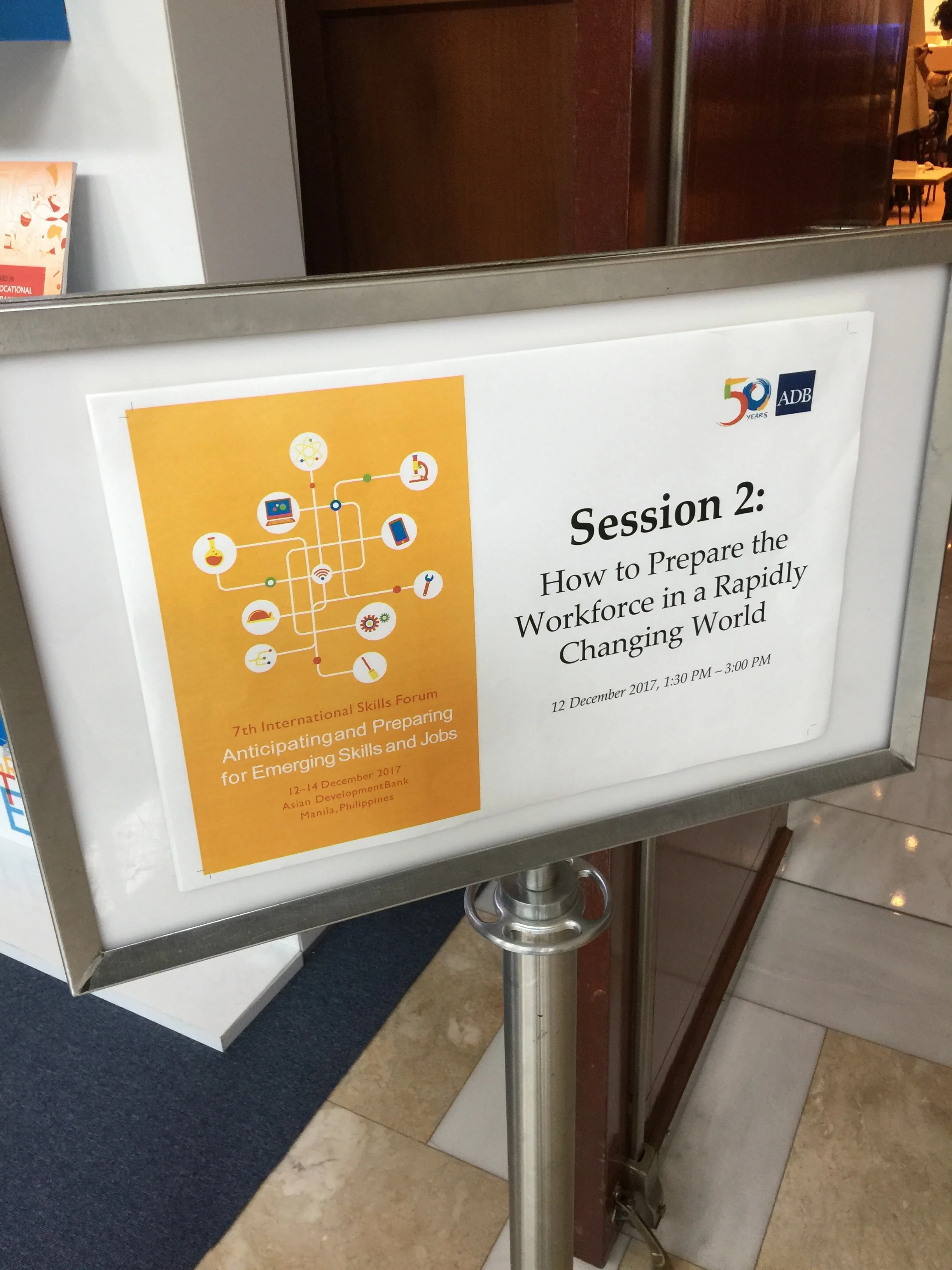
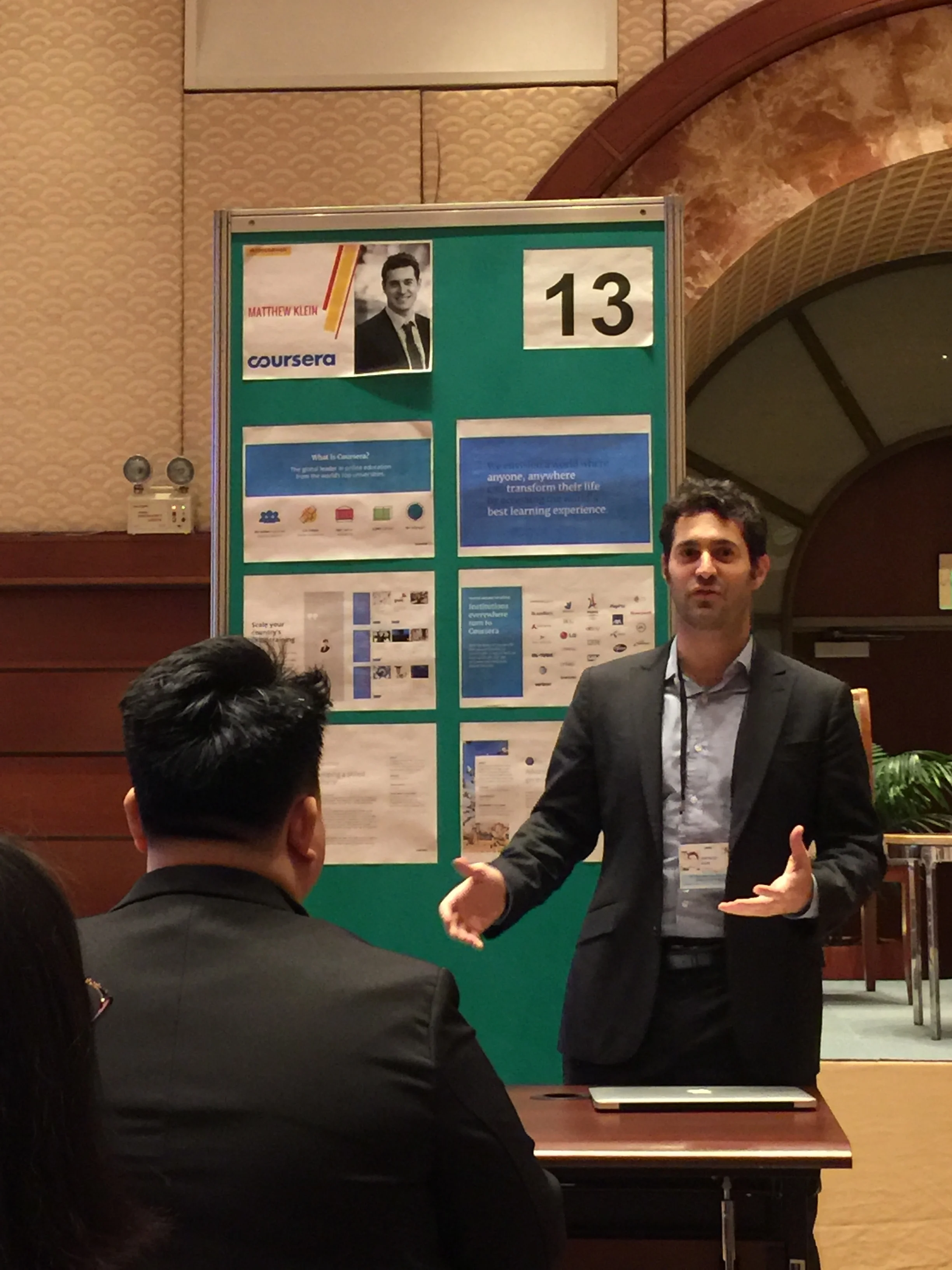
I was fortunate enough to attend the first day of the 7th International Skills Forum at the Asian Development Bank. I have recently taken into account the skills that I already have, so I am learning the skills which are needed in the workplace today. Innovation was a hit buzzword in the conference, and it has been brought up several times times. I have learned that in order to innovate in the industry today, we need to integrate the following skills in order to be prepared to work today:
1. Critical thinking
2. Asking quesitons
3. Design thinking
4. People Management
5. Creativity
6. Growth Mindset
It is important to prepare people for the future. We need to embrace technology in order to progress, but we still need human capital in the workplace because computers can never integrate critical thinking and ask questions. Also, design thinking entails empathy, so it is essential to have talent who are prepared to think outside the box in order to effectively serve the end user. Lastly, people management is crucial in retaining talent and continuing education. It is important that skills are constantly upgraded, so people must have access to training and development. Also, one of the speakers mentioned the emergence of We Q (interpersonal quotient), so it is important to know how to properly interact with other people in order to foster collaboration and communication. Indeed, human interactions can never replace the technological mobility available today.
In order to innovate in the workplace today, we must adapt a “lifelong learning” perspective.
As I prepare to enter the workforce again, I am honoured to be in this conference because it reinforces my belief that skills are the key to innovation. It has been discussed that knowledge-based jobs are already the trend nowadays, compared to the “permanent job” workplace which was the norm in the past. Personally, I am going to accept a permanent job soon, but I will also adapt and innovate by being flexible and fluid with my skills and knowledge upgrading. I am prepared for the future through continuous learning and exposure to industry trends and changes.